
An Imperfect Parent
This article is written by Victoria Oliver, LPC, Yoga to Cope vice president. She’s a 500RYT yoga professional with a background in corporate wellness, and currently leads her own wellness offerings via her company, Reach The Crown.
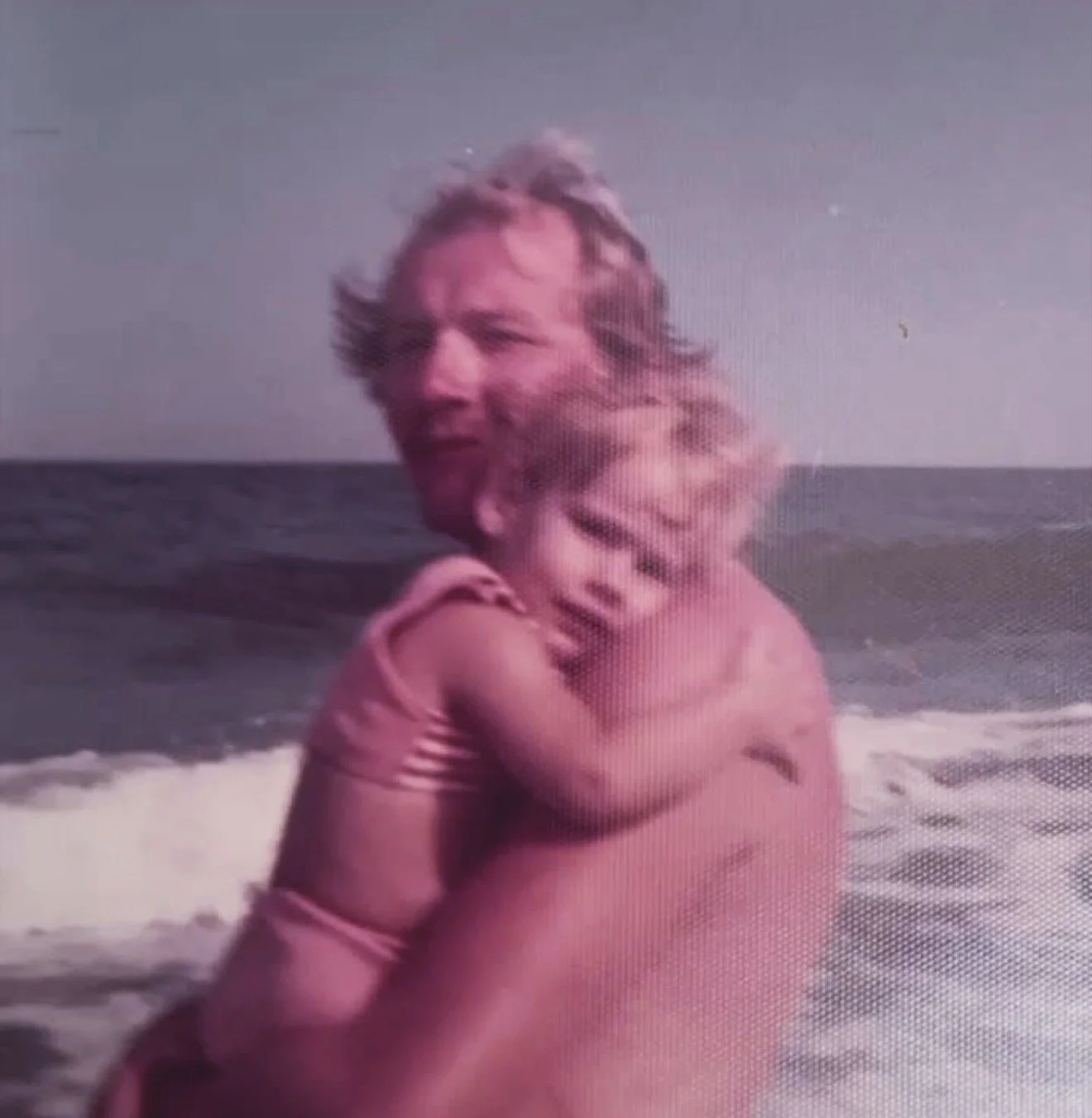
My earliest memory of my life is being in a swimming pool with my dad at the Polynesian hotel at Disney World. I remember the layout of the pool, that I was wearing a yellow life jacket with my hair in pig tails, and I felt like my dad loved me. I was three years old. Fast-forward two years ahead. How times can change.
When I was five, my parents went through a divorce. I always thought it was interesting to hear people say they “are going through” a divorce, but it really does make sense and embodies how one feels during that time. You are going through something that will inevitably change your life as you know it. The life I had come to know was living with an alcoholic father and a mother trying to make it work. My father was a blue-collar guy, a truck driver who drove an 18-wheeler, and a supporter of the union. He substantiated his drinking with the fact that he worked hard and deserved to relax. And he did. What was not deserved was what his drinking did to my family. The anger, the fighting, the pleading, the DUI which could have ended his career, the apathy, and, ultimately, the divorce.
My parents’ divorce was messy as I recall. My mother only had harsh and unkind words to speak. There were fights about my child support not being paid and my dad often did not show up for his scheduled Saturday visits with me. Sometimes he would pick me up and take me back to his apartment and put me in front of the TV while he took a nap. I used to think he didn’t want to spend time with me and he was bored and just going through the motions. I know now he was hungover. When I look back on it through a different lens, I know he was depressed and struggling, and he did not have the capacity.
Both my mother and my father remarried. My stepfather was in the Air Force and we moved to California for two years, then to North Carolina from the time I was in seventh grade until I graduated from college. During those years, my dad’s drinking continued and our relationship was mediocre at best. Our only contact was through occasional phone calls (this was before the internet and cell phones) and when I would visit my grandparents in Pennsylvania, where my father has always lived since he came to this country (more on that later).
I spent a good deal of my childhood feeling defective. I ate as a coping mechanism and was overweight as a child, which led to teasing and always getting picked last for the kickball team. I blamed myself for the lack of relationship with my dad.
Why doesn’t he care? What did I do? What should I do? Why am I unlovable to him?
When I went to college, I entered with the intention of being an art major and a psychology minor. My high school did not offer psychology classes. Reading a magazine called Psychology Today, got me interested in psychology, which prompted me to check out books about psychopathology and clinical theories. Once I started taking psychology classes, my fate was sealed. Learning about human behavior was fascinating, and it helped me to begin to understand the dynamics of my family system and the behaviors of my parents.
My father was a Polish immigrant. I vaguely remember visiting his parents, Babcia and Dziadek. It’s odd to write this, as they were my biological grandparents, but did not speak English and I never felt any connection to them. Looking back, I’m certain they never hugged or kissed me, never played with me, and I don’t remember ever seeing them smile. Their house was dark and cold. They as humans were dark and cold.
My mother was an only child. She never knew her biological father. He, too, was reportedly an alcoholic. My grandmother (whom I called Nan) remarried and my mother knew my Pop as her father. They had a love-hate relationship. My mom was a high school dropout and has always been attention-seeking. I learned that when she was a child my grandparents owned a business in Philadelphia and did not have time to parent her, so they sent her to a boarding school in the “country”(which is actually where I now live) and saw her sparingly. My models and references of family were not the apple pie American nuclear family. My family was broken. Sometimes I would go to a friend’s house and see what “normalcy” looked like. Sometimes friends would come to my home because it was what normalcy looked like to them. Those are other stories. I guess it really is all relative.
I graduated in 1993 with my Bachelor’s in Psychology and then moved back to Pennsylvania two weeks later to begin my Master’s program. At that point, I was the only person in my entire family to ever go to college. I was 21 years old. This was the first time I was living close to my dad, and we began to see each other and talk more. I married when I was 22 and bought my first home at age 23. He was very proud of me and I could now relate to him as an adult, which completely changed the dynamic of our relationship. I was in a healthy relationship and I was on my way to build my adult life, and looked forward to having kids and being a good parent. As I started my career, had children (I have two) and blossomed into adulthood, there came a point in time my dad’s drinking quelled. I mostly saw him and his wife on Father’s Day and Christmas, with a few visits in between. He and my mother also became not just cordial, but friends, and we would celebrate events together.
In 2016, my dad and his wife began to rent a condo in Wildwood, New Jersey, for a week in the summer. He invited myself and my kids down and from that vacation forward, my daughter and I went each year. It was during these vacations my dad and I had opportunities to really talk. Our last vacation in Wildwood was August of 2020. I decided I wanted to interview my dad and learn more about his life. I asked him if I could videotape him, but he felt embarrassed, so we agreed to an audio recording. It was then that I learned about my dad’s life in a way I never knew. He, his three sisters and his parents spent six days on a ship from Germany to come to the United States. His name is at the Ellis Island registry in NYC. He talked about coming to America without knowing English (although he spoke both Polish and German fluently) and the difficulties of acclimating to a whole new life. He talked about school and finding friends. He shared how he met my mother through helping my grandfather deliver doughnuts. And then, in this moment sitting on the balcony in the warm sun as I turned off the recording he said, “I know I wasn’t a good father. I didn’t know what to do. I was never taught. But I do love you and I am really proud of you Vicki. And I know things with your mother didn’t work out, but I have always loved her too. I’m sorry.”
As I welled up with tears, I said “I know Dad, and I forgive you.” Then we embraced and I felt like the 3-year-old little girl back at the happiest place on earth.
It is such an interesting thing that we humans can carry so much hurt and pain for such a long time, and then in the right circumstance, we can be free.
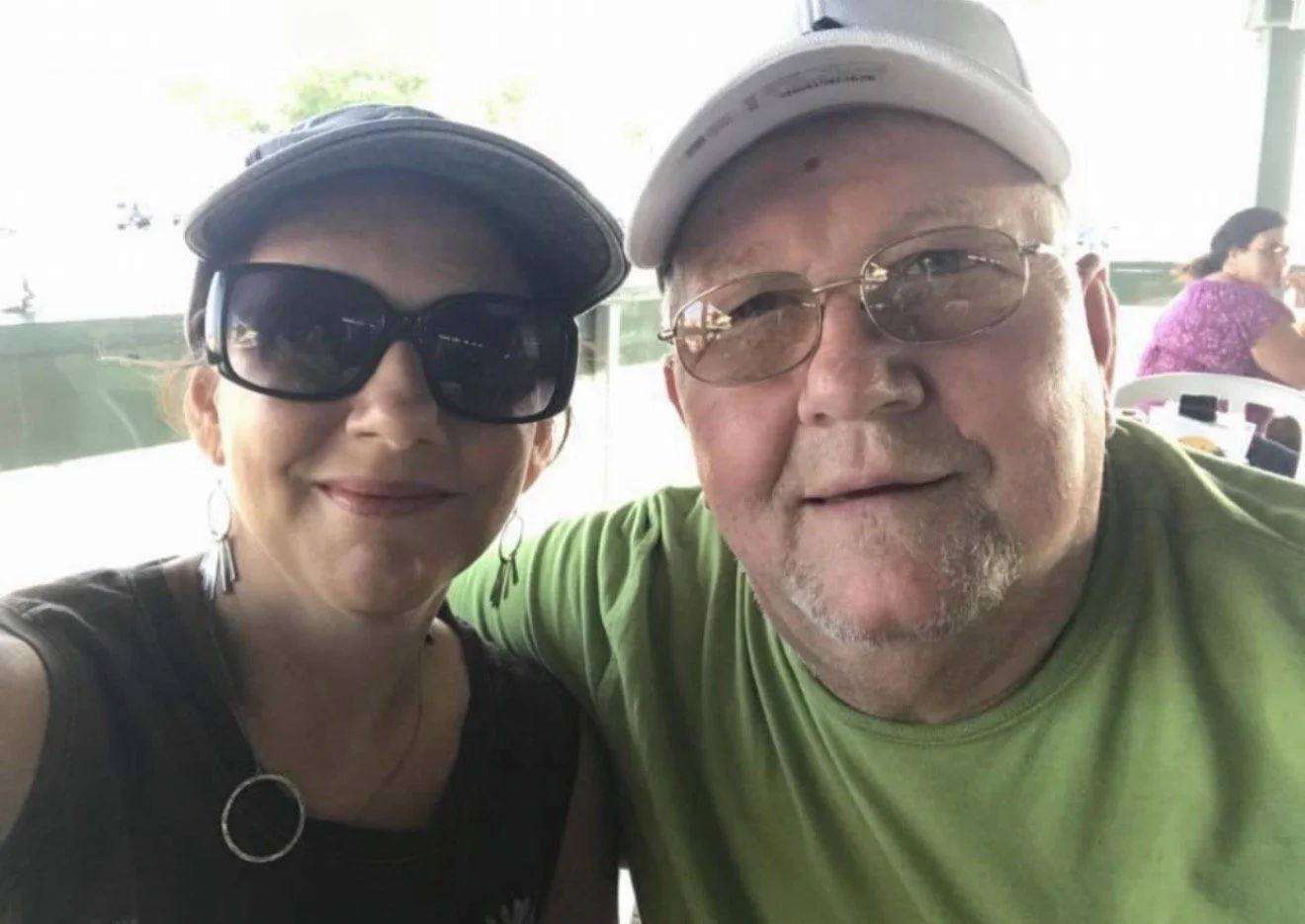
My father was an imperfect parent. So were his parents. He was correct. He really did not know what to do or how to do it. He did not have a role model or a guidebook. He was self-medicating with alcohol for at least half of his life, which led to poor choices. He was hurting too. Could he have done better? Absolutely. Do I think he did his best given his own circumstances and his level of understanding? Yes, I do. It’s not an excuse because we can all make choices to better our lives and break negative intergenerational cycles—I did. But I had something my father didn’t: the capacity, the education, and the tools to do so.
August 2020 was the last time I saw my dad. After that life-changing Wildwood vacation, we had some phone calls and were supposed to have Thanksgiving dinner together, but he had been sick for several weeks. At the time, I was working on the leadership team at a local health system and we were in the throes of COVID.
I kept begging my dad to get tested and he finally agreed. He was COVID-positive. He was in the high-risk population because of his age, being diabetic, having COPD, sleep apnea, high cholesterol, and being obese. He also had a fall in his driveway taking out the trash as he was so weak from the virus. I was in touch with him ongoing and one morning on my way to work, I had the feeling I should call him. This was unusual because it was early. His wife said he was not well and when I asked what his blood oxygen level was (as I had ensured he got a pulse oximeter to keep tabs on his breathing), she said it was 68. “Call an ambulance right now!” I blurted out. “I am on my way!” The ambulance arrived and my dad was brought out on a stretcher. He stared into the sky. He could not even look at me. I know this is because he was scared and would cry, and that he thought it may be the last time he would see me. He was right. He suffered for three weeks until he could no longer breathe and his organs were failing. I had to make the decision to take him off life support. I still hold guilt about this almost six years later. I feel like he helped give me life and I helped take his away.
My dad died on December 16, 2020, two days before his 75th birthday. On the day we were scheduled to take him to our annual hibachi dinner to celebrate, I wrote his obituary. Was he imperfect? Yes. But I am too. We all are. I forgive him and I forgive myself.